
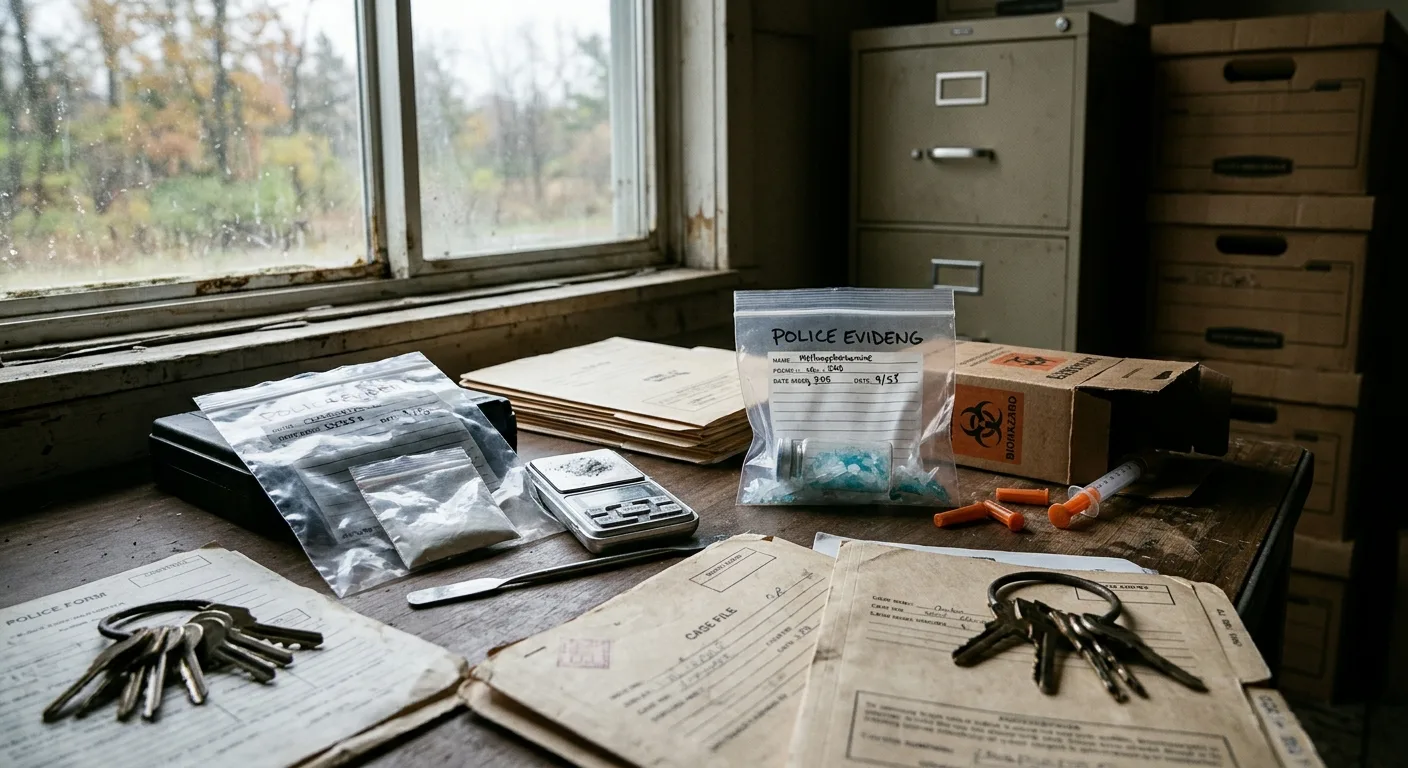
Rising Meth and Cocaine Deaths in Minnesota: What Drug Charges Actually Look Like
The Minnesota Department of Health recently released data showing that fatal overdoses tied to methamphetamine and cocaine have climbed sharply in our state, even as opioid-related deaths have started to fall. That shift is not just a public health story. In my experience, when data like this becomes public, it signals that investigative resources and prosecutorial attention follow. More Minnesotans are likely to find themselves facing stimulant-related drug charges in the months and years ahead.
I want to use this moment to explain what those charges actually look like under Minnesota law, what the state has to prove, and where the real legal issues tend to arise. This is not a scare piece. It is practical information for ordinary people who deserve to understand their situation.
Minnesota's Controlled Substance Laws: The Degree System
Drug crimes in Minnesota are governed primarily by Chapter 152 of the Minnesota Statutes. The law organizes controlled substance offenses into five degrees, with first degree being the most serious and fifth degree being the least. Where a case lands on that scale depends mainly on two things: the type of drug involved and the quantity at issue, and whether the person is accused of simple possession or of sale.
Methamphetamine and cocaine are both Schedule II controlled substances under Minnesota law, which means the state treats them as drugs with a high potential for abuse and a significant risk of dependence. That classification matters because it places them squarely within a part of the statute that carries serious criminal exposure, even at relatively modest quantities.
The jump from one degree to the next can hinge on a weight threshold that may seem arbitrary. A small difference in the measured weight of a substance, sometimes a matter of grams, can be the difference between a lower-level felony and a first-degree charge that carries potential prison time measured in years rather than months. Understanding where your case falls on that scale is one of the first things a defense attorney needs to figure out.
What "Possession" Means Under Minnesota Law
Most people assume possession means the drugs were in their hand or their pocket. Legally, it is broader than that. Minnesota recognizes what is called constructive possession, which means the state can charge you even if the drugs were found in your car, your home, or a shared space, as long as prosecutors believe they can prove you knew the substance was there and had the ability to exercise control over it.
That is important to understand because proximity alone can put someone in serious legal jeopardy. It also means there are often legitimate arguments to be made about whether constructive possession can actually be proven beyond a reasonable doubt. If three people are in a car and drugs are found under a seat, the state still has to prove which person, if any, actually possessed them. That is not always easy to establish.
Possession Versus Sale: A Critical Distinction
Sale charges carry heavier potential penalties than straight possession charges at every degree of the offense. And the definition of "sale" under Minnesota law is broader than most people expect. You do not have to be running a distribution network to face a sale charge. Sharing drugs with another person, acting as an intermediary, or in some circumstances even agreeing to obtain drugs for someone else can expose you to a sale allegation.
When the evidence includes large quantities, packaging materials, cash, digital scales, or communications that suggest distribution, prosecutors will typically pursue sale rather than simple possession. The charge you face shapes everything that follows, including the range of potential consequences and the plea options that may or may not be available.
How the Weight of the Substance Is Calculated
One thing that surprises many people is how the state measures drug quantities. The weight used to determine the degree of the offense typically includes the entire mixture containing the controlled substance, not just the weight of the pure drug itself. If methamphetamine is mixed with another substance, the total weight of the mixture often counts.
The testing is done by a state crime laboratory, and the reported weight is what drives the charging decision. Because so much rides on that number, the lab's methodology, the condition of the sample, and the chain of custody between seizure and testing are all areas that a thorough defense attorney will examine carefully.
What Happens After an Arrest
If you are arrested on a drug charge, you will typically be booked and then a prosecutor will decide what charges to file. In more serious cases, there will be a bail hearing where the court decides whether you are released pending trial and under what conditions. From there, the case moves through a series of court appearances, and your attorney will have an opportunity to challenge evidence before any trial takes place.
One of the most powerful tools in drug defense is a pretrial motion to suppress evidence. If law enforcement obtained the drugs through a search that violated your Fourth Amendment rights, a judge may exclude that evidence from the case. Without the physical evidence, the prosecution often cannot proceed. These motions require a close analysis of exactly how the search happened: whether there was a warrant, whether any recognized exception to the warrant requirement applied, whether the stop itself was constitutionally valid, and whether the officers' conduct stayed within legal limits at every step.
I have seen cases that looked overwhelming on paper turn significantly in the defendant's favor once the search was examined closely. It is never safe to assume the evidence is clean just because it was collected by law enforcement.
Other Defense Angles Worth Understanding
Beyond suppression motions, a defense attorney will evaluate several other areas in a drug case:
- Chain of custody: Evidence has to be properly collected, labeled, stored, and transferred before it reaches the lab. Gaps or irregularities in that chain can create reasonable doubt about whether what was tested is actually what was seized.
- Lab testing methodology: Results from the state crime lab are not automatically beyond challenge. The testing process, the equipment used, and the qualifications of the analyst can all be scrutinized.
- Constructive possession disputes: If the drugs were not on your person, the state has to prove you knew they were there and had control over them. That is not always easy for prosecutors to establish, especially in situations involving shared spaces or multiple occupants.
- Quantity disputes: If the measured weight is close to a threshold that triggers a higher degree of offense, there may be room to challenge the weight or the composition of the mixture.
- Entrapment: In cases where law enforcement was heavily involved in creating the circumstances of the alleged offense, this can sometimes be a viable argument. It is a high bar to meet, but it is worth evaluating in the right case.
Are There Alternatives to Conviction?
Minnesota does have mechanisms that allow some defendants, particularly those charged at the lower end of the offense scale, to resolve their cases through treatment or diversion rather than a criminal conviction. Many counties have drug court programs. Prosecutors sometimes offer diversion agreements that, if completed successfully, result in the charges being dismissed. These paths are not available in every case and are generally not available for the most serious charges, but they exist and are worth exploring in the right circumstances.
Whether any of these alternatives are on the table depends on the specific charge, the county where the case is filed, the person's prior record, and how the situation is presented. An attorney who knows the local prosecutors and the county's approach to diversion can make a real difference in whether those options may be considered.
Why This Data Matters for Minnesotans Right Now
When public health data shows a spike in deaths tied to a particular drug, law enforcement agencies use that same data to justify task force resources, undercover operations, and enforcement priorities. That does not mean every person reading this is at risk of being investigated. It does mean that the environment around meth and cocaine enforcement in Minnesota is likely to become more intense, not less, and that people who find themselves involved in a traffic stop, a search, or an arrest where stimulants are involved need to take the situation seriously from the very first moment.
The most common mistake I see is people assuming the situation will sort itself out, or believing they can talk their way out of it by explaining themselves to officers. What you say to law enforcement can be used against you. What you decline to say, with an attorney's guidance, cannot.
Talk to a Defense Attorney Before You Do Anything Else
If you or someone in your family is facing a drug charge in Minnesota, or if you believe you are under investigation and have not yet been charged, please speak with a defense attorney before making any statements to law enforcement or anyone else involved in the case.
I have been defending Minnesotans on drug charges for over thirty years. I am happy to talk through your situation in a confidential consultation and give you an honest assessment of where things stand. You can reach Segal Defense, P.A. at our Bloomington office.
Sources: MPR News: Fatal meth and cocaine overdoses up in Minnesota; opioid overdoses drop